 |
Pathways Pointer – Number 52 – August 9, 2026 |
|
||||||||||
Helpful TipOpen and read the Pathways project before you prepare your speech. Understand the purpose, objectives, requirements, and evaluation criteria first. Then choose or adapt a speech that lets you practice the skill the project was designed to teach. |
||||||||||
Start With the Project—Not the SpeechIt is tempting to decide what you want to talk about, prepare the speech, and then search Pathways for a project that seems to fit. |
||||||||||
|
Try reversing the process. Open the project first. Read it. Understand what you are supposed to learn. Then decide what subject, story, or presentation will help you accomplish it. |
||||||||||
Four Things to Review Before You Write
|
||||||||||
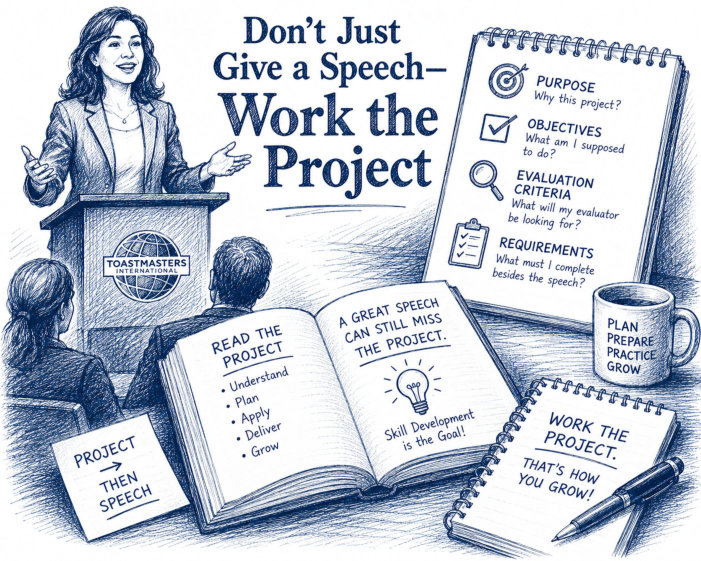
1. Understand the PurposeThe purpose tells you why the project exists. It identifies the communication or leadership skill the project is designed to develop. |
||||||||||
|
The project may focus on storytelling, vocal variety, persuasive speaking, mentoring, audience interaction, leadership, research, or another specific skill. The purpose answers the question: “Why am I doing this project?” |
||||||||||
2. Identify the ObjectivesObjectives turn the project’s purpose into action. They explain what you are expected to accomplish. |
||||||||||
|
You may be asked to research a topic, use a particular speaking technique, lead an activity, receive and apply feedback, complete a leadership assignment, or demonstrate a specific communication skill. Ask: “What am I supposed to do as part of this project?” |
||||||||||
3. Read the Evaluation CriteriaDo not wait until the meeting to look at the evaluation resource. Read it before you prepare your speech. |
||||||||||
|
Your evaluator is not simply being asked, “Was this a good speech?” The form identifies the particular skills the evaluator should watch for. Reading it in advance gives you a preview of what successful performance looks like. |
||||||||||
4. Check Every Project RequirementSome Pathways projects require much more than delivering a speech. |
||||||||||
|
You may need to complete an activity, serve in a meeting role, organize an event, lead a team, mentor another member, gather feedback, complete a resource, or report on an experience. Read the entire project so that you do not overlook work that happens outside the speech. |
||||||||||
“But I Already Have the Perfect Speech!”There is nothing wrong with using an existing speech, professional presentation, personal story, or familiar topic—provided it fulfills the project’s requirements. |
||||||||||
|
The important question is not, “Can I use this speech?” It is, “Can I use this speech to accomplish the objectives of this project?” Sometimes a familiar speech needs only a few changes. Other times, it may be an excellent speech but the wrong vehicle for that particular project. |
||||||||||
A Great Speech Can Still Miss the ProjectImagine delivering a polished, entertaining speech. The audience laughs. Your stories connect. Your timing is strong. |
||||||||||
|
But the project called for you to demonstrate a specific skill—and you never demonstrated it. You may have given an excellent speech, but you did not fully work the project. Pathways is not only about accumulating speeches. It is about intentionally developing skills. |
||||||||||
Before Your Next Pathways SpeechBefore writing your opening sentence, answer these questions: |
||||||||||
|
||||||||||
Your Pathways ChallengeBefore preparing your next speech, spend ten minutes reading the entire project and its evaluation resource. Then ask yourself: “What skill is this project asking me to develop, and how will my speech help me practice it?” |
||||||||||
| Bottom Line | ||||||||||
|
Do not choose a speech and try to squeeze it into a project. Instead, read the project, understand its purpose, identify its objectives and requirements, review the evaluation criteria, and then choose or develop your speech.
Your speech is the vehicle. The project is the journey. |
||||||||||
QUICK REMINDERRead the project first. Know the purpose and objectives. Review the evaluation criteria. Complete every requirement. Don’t just give a speech—work the project! |
||||||||||
 |
||||||||||
Resources | ||||||||||
| My Pathways Website | ||||||||||
| Pathways Pointers Index | ||||||||||
| Pathways Pocket Guides | ||||||||||
|
Visit My Pathways Website for practical information: Pathways Pointers, Pocket Guides, meeting-role guidance, and resources that can help you identify and complete your next step. |
||||||||||