|
|||
|
|||
| PATHWAYS POINTERS OVERVIEW | |||
|
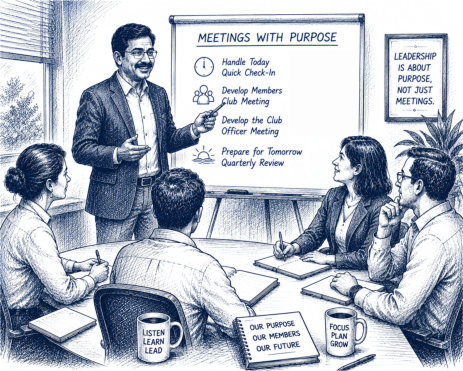
Great Leaders Don’t Just Hold Meetings — They Give Them a Purpose A meeting without a clear purpose is just time on the calendar. Toastmasters know a lot about meetings. We attend them, organize them, lead them, evaluate them — and occasionally wonder why we are having them. But effective leaders recognize an important distinction: not every meeting should accomplish the same thing. A quick check-in, a regular club meeting, an Executive Committee meeting, and a periodic planning session each serve a different purpose. The secret is not necessarily having more meetings. It is knowing what each meeting is supposed to accomplish. What’s New? Instead of treating every meeting alike, think of meetings as different leadership tools. A quick check-in handles today. A club meeting develops members. An officer meeting develops the club. A periodic strategic review prepares for tomorrow. Choose the right meeting for the job. Helpful Tip Before scheduling your next meeting, complete this sentence: “By the end of this meeting, we need to __________________.” If you cannot easily fill in the blank, you may not need the meeting — or you have not yet determined its purpose. Give Every Meeting a Job One useful leadership approach is to organize meetings according to their purpose and their time horizon. That idea translates particularly well to Toastmasters. 1. The Quick Officer Check-In — Handle Today This does not necessarily need to be a formal meeting. It might be a short email, group message, phone call, or five-minute Zoom conversation. The question is simple: What needs attention right now?
Keep it short. The purpose is coordination, not lengthy discussion. 2. The Club Meeting — Develop the Members Our regular Toastmasters meeting has a very different purpose. Its primary job is not conducting club business. It is developing people. Members need opportunities to:
A smoothly run agenda is important, but it is not the ultimate measure of a successful meeting. Did our members have opportunities to speak, lead, learn, and grow? That is the real purpose of the Toastmasters meeting. 3. The Executive Committee Meeting — Develop the Club Officer meetings should not simply become longer versions of the regular club meeting. This is the officers’ opportunity to work on the club, rather than simply work in the club. Look at:
Then ask: What does our club need from us right now?
Use the club meeting to develop members.
Use the officer meeting to develop the club. 4. The Quarterly Club Health Check — Prepare for Tomorrow Every few months, club leaders should look beyond the next agenda. Step away from questions such as: Who is Toastmaster next week? Instead, ask:
Look for trends rather than isolated events.
This is where leadership becomes more than maintaining the schedule. It becomes creating the future of the club. The Leadership Lesson This idea is not limited to Toastmasters. Whether you are leading a club, committee, volunteer organization, project team, or workplace meeting, decide what kind of meeting you are conducting before you begin. A meeting might be intended to:
Problems arise when we try to accomplish all six at once. Great leaders do not simply ask: “When should we meet?” They first ask: “Why are we meeting?” Put the Purpose on the Agenda One of the easiest ways to keep a meeting focused is to state its purpose before the meeting begins.
Purpose of Today’s Meeting:
____________________________________________ It takes only a few seconds, but it helps everyone understand why they are there and what success should look like when the meeting ends. Try This at Your Next Meeting Before the meeting begins, ask yourself three questions:
Those three questions can prevent a meeting from becoming a collection of unrelated conversations. Bottom Line Toastmasters teaches us how to conduct meetings. Leadership requires something more: Knowing why we are conducting them. Do not hold a meeting simply because it is on the calendar. Give every meeting a purpose. |
|||
|
RESOURCES |
|||
|
How Great Leaders Structure Their Meetings Toastmasters International Resources Toastmasters International Pathways
|
|||