
|
Pathways Pointer Number 56, September 1, 2026 |
|
Have you ever logged into Base Camp, looked at your path, and thought, “I just don't have time for this right now”? |
||||||||||||
|
One of the easiest ways to get stalled in Pathways is to believe that you need an hour—or even an entire evening—to make meaningful progress. |
||||||||||||
|
You don't. |
||||||||||||
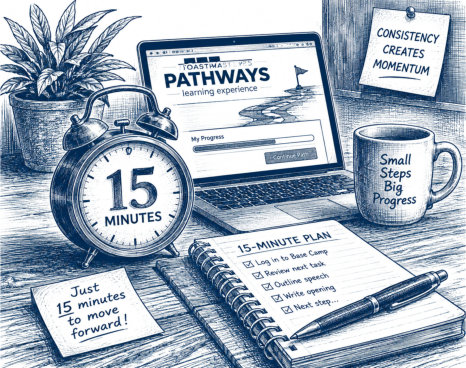
Try the 15-Minute RuleSet aside just 15 minutes for Pathways. |
||||||||||||
|
That's it. |
||||||||||||
What Can You Accomplish in 15 Minutes?More than you might think. |
||||||||||||
|
||||||||||||
|
You don't have to finish something every time
you log in. You just need to move it forward.
|
||||||||||||
Why It WorksGetting started is often harder than doing the work. When we tell ourselves, “I need to work on Pathways,” the task can feel large and undefined. |
||||||||||||
|
But 15 minutes feels manageable. You know exactly what you are committing to, and there is a clear stopping point. |
||||||||||||
|
And something interesting often happens. Once you get started, you may decide to keep going. Your planned 15 minutes becomes 25 minutes—or perhaps you finish the outline you've been postponing. |
||||||||||||
|
But even if you stop after exactly 15 minutes, you've still made progress. |
||||||||||||
Break a Project Into 15-Minute Steps
|
||||||||||||
Make It a HabitTry scheduling one or two 15-minute Pathways appointments with yourself each week. |
||||||||||||
|
||||||||||||
|
Three short sessions can accomplish much more than waiting several weeks for the mythical evening when you finally have “enough time.” |
||||||||||||
Helpful TipBefore ending each 15-minute session, write down one specific thing to do next. |
||||||||||||
|
Instead of writing:
|
||||||||||||
|
The next time you sit down, you won't waste your first five minutes trying to remember where you stopped or deciding what to do next. |
||||||||||||
The 15-Minute Challenge
Sometime in the next 24 hours:
|
||||||||||||
|
You may be surprised by how much you've accomplished—and you may discover that getting started was the hardest part. |
||||||||||||
QUICK REMINDER
|
||||||||||||
Bottom LinePathways progress doesn't always come from long hours of work. It comes from consistently taking the next small step. |
||||||||||||
|
If you're stuck, don't wait until you have more time. |
||||||||||||
|
Give Pathways 15 minutes. |
||||||||||||
|
Fifteen minutes may not finish your path—but it
can get you moving again.
|
||||||||||||
RESOURCESUse these resources to continue building your Pathways knowledge and keep moving toward your next educational goal. |
||||||||||||
|